Chasing Shadows and Splashes: My Journey Photographing the Wild Salt River Horses
The Reality of Wildlife Photography
Photographing the Salt River horses is often hit or miss. I do advise you to do some research beforehand, but here are the two locations that have been reliable for me.
33.554358, -111.635091
33.616462, -111.554786
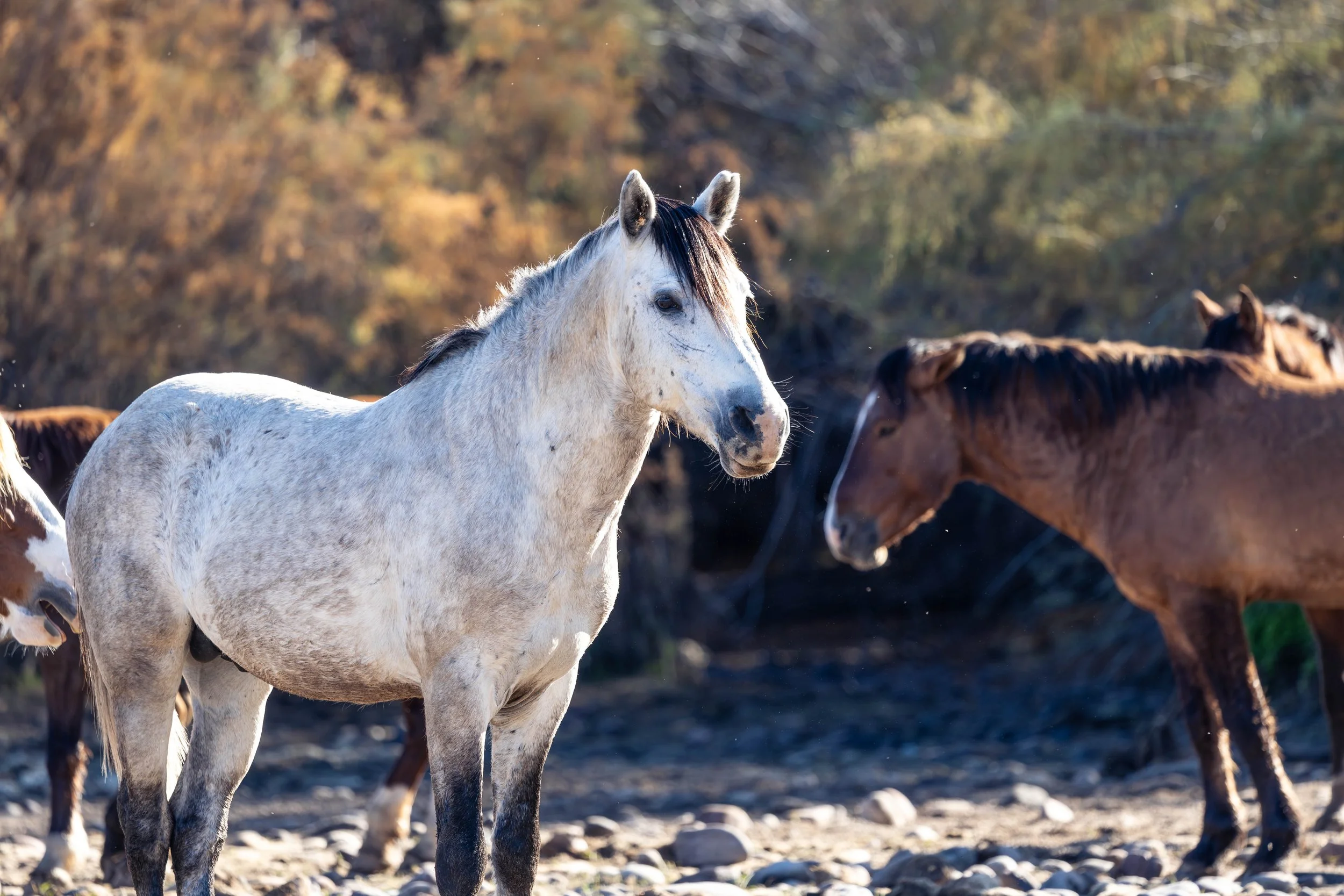
Remember, this is not a petting zoo. The horses are not going to pop up and put on a pony show for you. They may or may not be there so practice patience. There are, as of 2025, about 300 wild horses along the river.
How to Photograph the Salt River Wild Horses: Pro-Tips
If you’re planning your own trek into the Tonto National Forest, here is how to make sure you come home with the shot—without disturbing the herd.
1. The Right Gear
Telephoto is Essential: You shouldn't (and legally cannot) get close. A 70-200mm or 100-400mm lens is the gold standard here. It allows you to fill the frame while respecting the horses' space.
Stabilization: If you're hiking deep like I did, a lightweight carbon-fiber tripod or monopod is a lifesaver for those long waits in the sun.
Trail Cameras: For those "intimate views" into their night lives, a reliable trail cam (like the TC22 I used) can capture behaviors you’d never see in person, from nighttime river crossings to desert predators like mountain lions.
2. Mastering the Light
Avoid the "Midday Flat": Midday sun in Arizona is relentless. As I found out, the light is harsh and the shots often fall flat.
The Golden Windows: Aim for the "shoulder hours"—two hours after sunrise or two hours before sunset. This is when the horses are most active at the water’s edge, and the "backlighting" can create stunning silhouettes.
3. Dialing in Your Settings
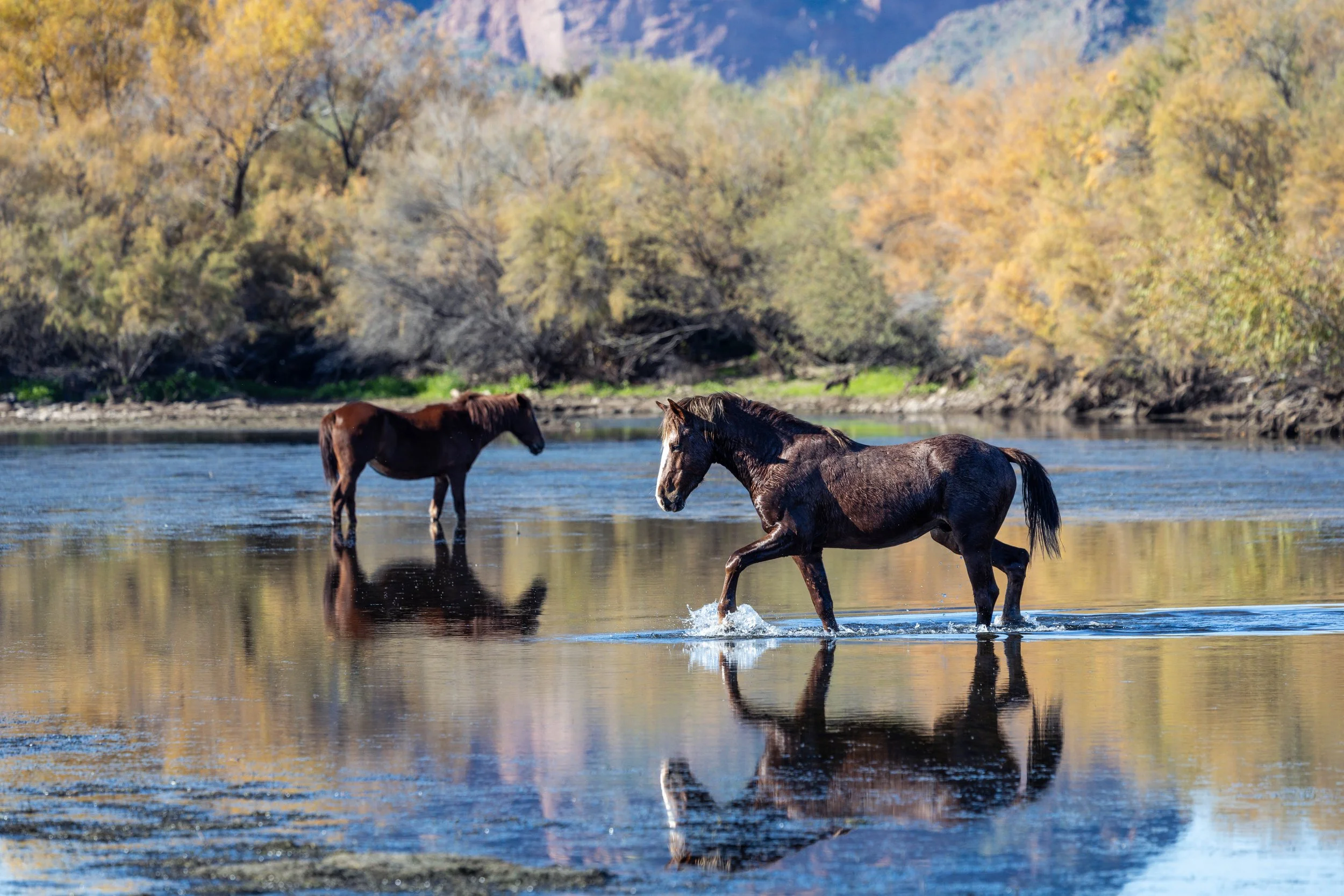
Freeze the Action: If a stallion starts to "thunder" through the water, you need speed. Set your shutter to 1/1000s at a minimum. For that "frozen crystal" water splash look, dial it up to 1/2,000s.
Aperture Strategy: Use a wider aperture (like f/2.8 or f/4) to create that creamy background blur, helping the horse "pop" against the busy desert brush.
Stay safe while you are out there. Hydration is very important. Make sure you bring plenty of water. Something that I am adding to my Salt River Horses kit is a small, folding stool. There is no place to sit unless you are willing to sit on horse manure. I'll be bringing a stool on my next excursion so I can relax while I wait.
Respect the horses. I cannot stress this enough. if they come within 50 feet of you, move. I saw a lot of tourists with cell phones trying to get a closeup. They were tempting with fate be trying to get close to two stallions that were clearly about to engage in combat.