Photographing a Rattlesnake at Night in the Sonoran Desert
When you live in the Sonoran Desert, you’d think finding rattlesnakes would be easy. Truth be told, I usually stumble across them by accident — often when I’m walking at night. This time, though, I went out with the intention of photographing one of these incredible reptiles.
A Surprise Encounter with “George”
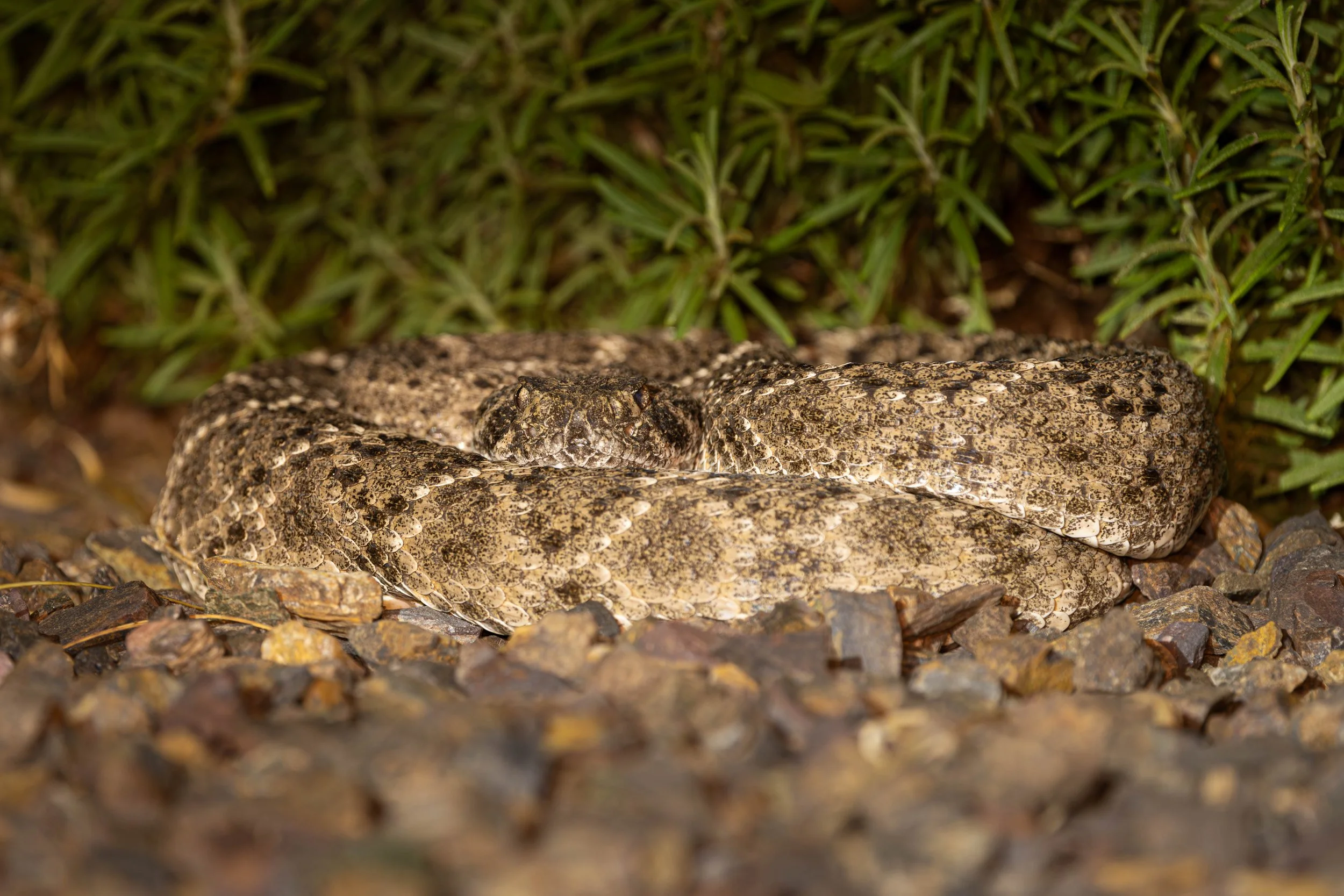
It all started while checking in on a neighbor. Right beside the sidewalk, coiled and silent, was a Western diamondback rattlesnake. Under the glow of neighborhood lights, I finally had my chance. At night, with my camera ready, I set out to capture the moment.
This rattlesnake, which I later named “George,” remained absolutely motionless. No tongue flick, no rattle — just complete stillness. To photograph him, I had to use a 5-second exposure. That’s how still he was, locked in stealth mode.
Keeping Safety First
Photographing venomous snakes requires more than technical skill — it demands respect for the animal and a focus on safety. Here are the key practices I followed and always recommend:
Keep your distance. A telephoto lens is your best friend. Always shoot from at least 6–10 feet away.
Stay situationally aware. Don’t get tunnel vision through your viewfinder. Look around for other snakes or hazards.
Never provoke or corner the snake. Give it space and an escape route. Most rattlers prefer to retreat when given the chance.
Know what to do if bitten. Call 911 immediately, stay calm, immobilize the limb, and keep it below heart level. Don’t try to catch the snake — hospitals use the same antivenom for all rattlesnake species.
The Capture and Relocation
While I was busy behind the camera, neighbors arranged for a snake handler to safely capture and relocate George a few miles away. Watching the capture was as tense as it was fascinating — and a reminder of just how important it is to coexist with wildlife carefully.
Final Thoughts
The desert can be eerie at night, but it’s also full of incredible opportunities for photographers willing to embrace the challenge. Photographing George was both thrilling and humbling. It reinforced the balance between capturing an image and respecting the wild subject in front of the lens.
If you’d like to see the full encounter, including behind-the-scenes video and editing steps, check out my YouTube episode ( https://youtu.be/hbomcsWwgFs ). You can also purchase prints of George at ExploreWithJason.com or find bonus content at Patreon.com/EWJ.
Stay safe out there — and always keep an eye on the ground. The desert has a way of surprising you when you least expect it.