
Surviving the High Peaks: Lessons on Altitude Sickness from the Yellowstone Expedition
When embarking on a wilderness adventure like the Yellowstone Expedition, most travelers focus on the "formidable wildlife" and the "spectacle of nature". However, as documented in the first leg of the journey, one of the most dangerous threats isn't a grizzly bear or a mountain lion—it is the very air you breathe.
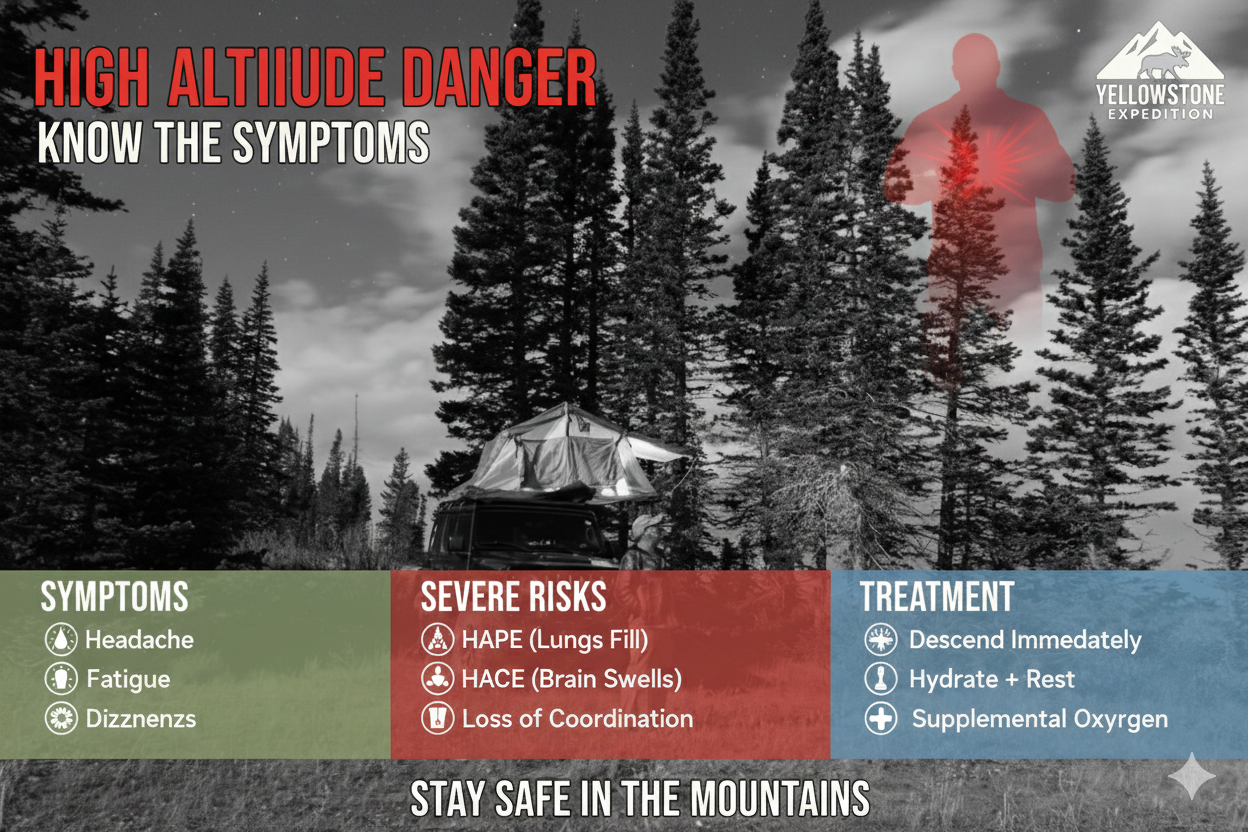
Safety First: Understanding the warning signs of altitude sickness is critical for high-elevation expeditions. Always monitor for persistent headaches or loss of coordination when camping above 8,000 feet.
During a transition through Utah, the expedition reached heights passing above 10,000 feet. While the high mountain air can be refreshing, it also presents a serious medical risk: Altitude Sickness (also known as Acute Mountain Sickness or AMS).
The Hidden Danger of High Altitude
Altitude sickness occurs when your body cannot get enough oxygen from the air because the atmospheric pressure is lower at high altitudes. On this trip, the symptoms didn't appear immediately during the drive; instead, they struck in the middle of the night while camped at peak elevation.
The expedition highlights a critical mistake: failing to consider the possibility of altitude sickness before settling in for the night. Even if you are in good physical shape—having lost weight and trained with a health coach—the altitude can still impair your judgment and physical health.
Recognizing the Symptoms: A Cross-Check from the Field
The symptoms you recorded during the expedition align closely with clinical definitions of Acute Mountain Sickness (AMS):
Suffocation Sensation: You reported waking up at midnight feeling as though you were suffocating. This is often related to periodic breathing at high altitudes, where breathing patterns become irregular, especially during sleep.
Severe Headaches: You described a headache "pounding harder than a frat boy's hangover". A persistent, throbbing headache is the primary diagnostic symptom of AMS.
Nausea: You experienced "on and off again nausea" throughout the night.
Insomnia: You noted being unable to go back to sleep after the symptoms began.
Impaired Judgment: You recognized that the altitude sickness could be impairing your judgment while attempting to pack up camp.
Other Common Symptoms You Might Not Have Experienced
While you experienced the most common symptoms, others can occur depending on the individual and the rate of ascent:
Dizziness or Lightheadedness: A feeling of being unsteady or faint.
Fatigue and Loss of Energy: Feeling unusually tired or weak despite minimal physical exertion.
Loss of Appetite: A sudden lack of interest in food.
Shortness of Breath during Exertion: Many experience an inability to catch their breath during even light tasks like packing gear, distinct from the feeling of suffocation at rest.
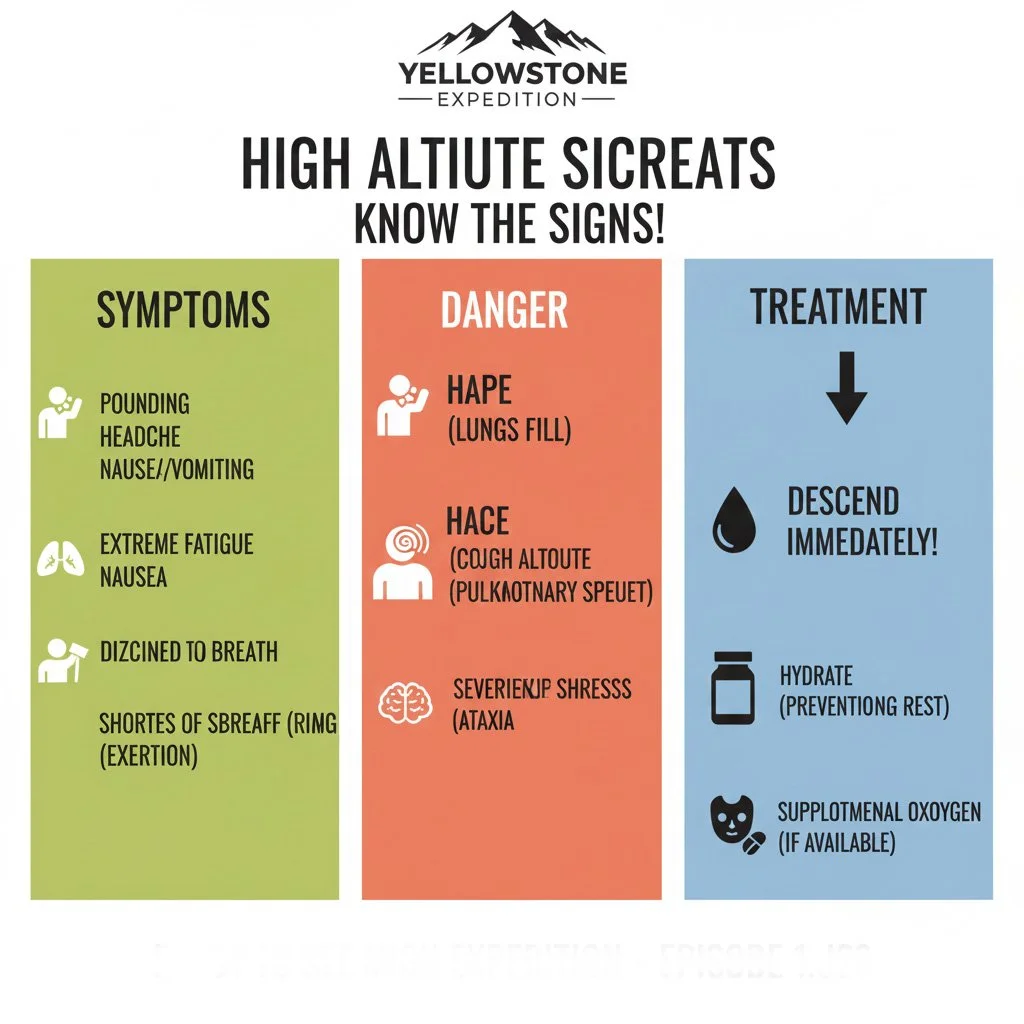
Safety Guide: Knowing the signs of Acute Mountain Sickness (AMS) can save lives. This guide summarizes the symptoms, dangers, and treatment protocols for high-altitude expeditions.
What Happens If You Don't Descend? The Risks of Remaining at High Altitude
Choosing to stay at 10,000 feet while symptomatic can lead to life-threatening complications. If you had not performed a "self-evacuation" to lower altitude, the following conditions could have developed:
HAPE (High Altitude Pulmonary Edema): This is a severe, often fatal, form of altitude sickness where fluid begins to accumulate in the lungs. Symptoms include a persistent cough (often with pink, frothy sputum), extreme shortness of breath even at rest, and gurgling or crackling sounds in the chest.
HACE (High Altitude Cerebral Edema): Another severe and potentially fatal condition where the brain begins to swell with fluid. This leads to extreme confusion, severe balance issues (ataxia, making it impossible to walk in a straight line), hallucinations, and eventually coma or death.
Worsening Exhaustion: As oxygen levels remain critically low, the body’s ability to perform basic physical tasks—like driving or dismantling a tent—diminishes, potentially leaving you stranded and unable to help yourself.
By dropping 4,000 feet in elevation, you effectively reversed the progression of these symptoms and allowed your body to recover its normal oxygen saturation levels, averting a potentially life-threatening situation.
Preparation is Key
While you can't always predict how your body will react to high altitudes, being in peak physical condition certainly helps. The expedition notes that working with a health coach to get into shape made the "self-evacuation" significantly more manageable than it would have been otherwise. Always acclimatize gradually if possible, stay hydrated, and recognize the signs early.
Before your next mountain trek, remember: respect the altitude, monitor your body's signals, and always have a plan to get to lower ground if the mountain starts pushing back.
Ready to see the wildlife that made the climb worth it? Check out the full Yellowstone Expedition Episode 1 to see the massive Bull Elk and Great Gray Owl captured after the descent.